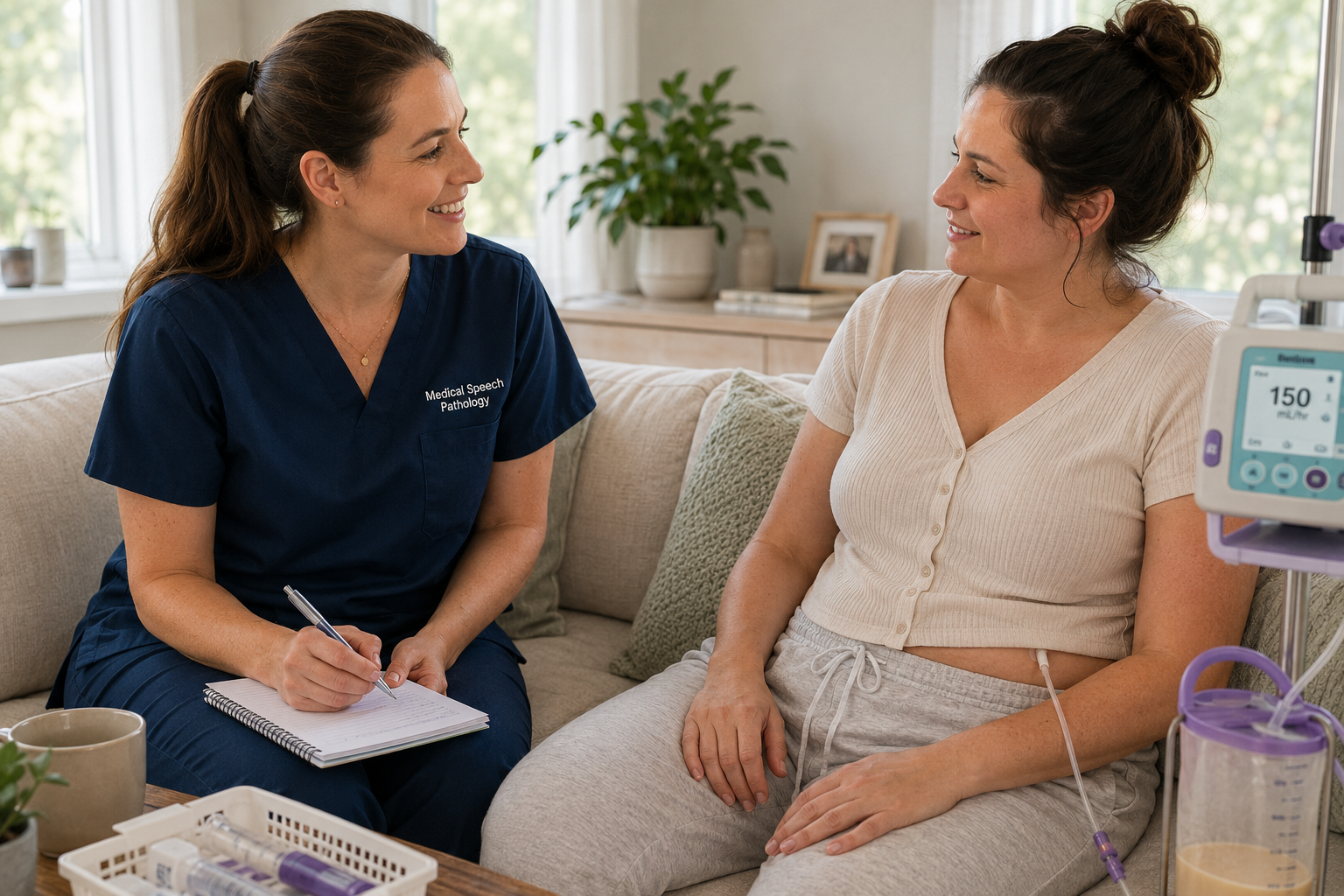
When a feeding tube enters the conversation, it is usually because something important isn’t working. A person may be unable to safely swallow enough food or fluid; eating may have become exhausting, distressing or inefficient; gastrointestinal disease may make conventional eating difficult or impossible; or nutrition and hydration may be inadequate despite considerable effort. Sometimes tube feeding is needed temporarily during illness or rehabilitation, while for others it becomes part of life for years or permanently.
Understandably, the conversations surrounding tube feeding tend to be clinical. What type of tube is appropriate? How will nutritional and hydration requirements be met? What feeding regimen will be used? How will medications be administered? Is oral intake still possible, and if so, what role will it have? What are the risks, and how will the tube be cared for?
These are essential questions, but they represent only one part of the experience. Once someone leaves the clinic or hospital, tube feeding has to fit into an existing life – work, study, relationships, travel, exercise, clothing, family meals, social occasions and all the other routines that have very little to do with healthcare. The questions can become much more practical and personal: What do you wear when clothing catches on your tube? How do you carry everything needed for a day away from home? What happens when you want to travel? How do you navigate a restaurant when everyone else is eating? What about swimming, exercise, dating, intimacy and body image?
These concerns aren’t peripheral to successful tube feeding. They are part of what it means to live with this method of nutrition and hydration, and these and other questions are answered in the magazine The Blend.
In healthcare, feeding tubes are understandably defined by their clinical purpose. A nasogastric tube, gastrostomy or jejunostomy provides a route through which nutrition, hydration and medication can be delivered when these needs cannot adequately be met in other ways. The person living with the tube, however, experiences it in a much broader context: while getting dressed in the morning, going to work, travelling, sitting around a table with friends, exercising, sleeping, dating, parenting and studying.
Those experiences also vary enormously. For some people, tube feeding replaces oral intake completely. For others, it supplements what they can manage by mouth or provides additional hydration, medication or nutrition. Oral intake may remain nutritionally important, or it may serve primarily therapeutic, social or pleasurable purposes. These roles can change over time as someone’s health, swallowing function and nutritional needs change.
This distinction is particularly important in dysphagia care because tube feeding and eating by mouth are not mutually exclusive. Decisions about oral intake need to be individualised according to swallowing physiology, medical risk, nutritional requirements, patient goals and informed choice. When enteral feeding is recommended, however, it should not automatically be framed as a failure of rehabilitation or the end of eating.
For some people, introducing tube feeding can actually create greater freedom around food. Someone who has been spending hours each day trying to consume enough nutrition orally may find that supplemental tube feeding removes some of that pressure. A person with significant dysphagia may have a reliable way to meet nutritional requirements while continuing rehabilitation, while someone else may be able to eat smaller amounts for enjoyment without every mouthful carrying the burden of meeting their nutritional needs. The experience will be different for every person, but the success of tube feeding cannot be understood purely by looking at what is delivered through the tube.
Clinical education before and after tube placement rightly covers tube care, feeding schedules, equipment, medication administration and recognising complications. The practical learning curve, however, extends considerably beyond this.
Travel is a good example. A holiday for someone who tube-feeds may involve planning for formula or blended food, syringes, extension sets, feeding pumps, chargers, medications and spare equipment, as well as working out how supplies will be transported, stored and used away from home. In its feature Have Feeding Tube, Will Travel, The Blend explores the experiences of families travelling with tube-feeding equipment, including the preparation involved in travelling internationally with supplies, medications and replacement equipment.
Clothing raises another set of considerations. The position of a tube, how easily it can be accessed, whether clothing rubs or catches on it, and whether someone prefers their tube to be visible can all influence something as ordinary as getting dressed. The Blend has explored adaptive clothing for tube-fed children as well as fashion, makeup and modelling within the tube-feeding community.
Then there are the smaller logistical challenges that accumulate across daily life: carrying equipment, feeding at work or university, finding somewhere suitable to manage supplies, dealing with a pump alarm in public, cleaning equipment, storing feeds and deciding how much medical information to disclose to colleagues, friends or strangers. None of these questions appear on a swallow study, but collectively they can have an enormous effect on how manageable tube feeding feels.
Food is more than a means of delivering calories and nutrients. It is embedded in culture, family routines, comfort, celebration and social connection. We meet friends for coffee, celebrate birthdays with cake, cook for people we love and organise significant parts of social life around eating together. When the relationship between eating and nutrition changes, there may therefore be much more to navigate than simply finding another route to meet nutritional requirements.
For some people, oral eating remains part of life alongside tube feeding, while for others it may be significantly restricted or not possible. Some people experience considerable grief around the loss or reduction of oral eating; others describe relief after years of painful, exhausting or stressful attempts to maintain adequate intake. Both experiences – and many combinations of them – are valid.
There can also be choices around what is delivered through the tube. Commercial enteral formulas remain an important and appropriate option for many people, while blended whole-food tube feeding may be considered in some circumstances with appropriate dietetic and medical support. The Blend explores this side of tube feeding as well. Its professional feature The Whole Story looks at blended feeding and whole-food approaches from both clinical and family perspectives.
This is one of the areas where lived experience can add something that clinical education alone cannot. Knowing how a feeding method works is different from understanding how it fits into family meals, travel, school, work, cultural food practices and the rhythms of everyday life.
A feeding tube can also change someone’s relationship with their body, although what that means is deeply individual. Some people prefer their tube to remain private, while others are comfortable having it visible or actively choose not to conceal it. Feelings about visibility, body image and disclosure can also change over time and in different contexts.
The Blend’s stories explore these experiences from several angles, including body image, fashion and personal accounts from people living with tubes. In Tubes and All, Liv describes initially hiding her feeding tube and later sharing her experience publicly. Part of that journey involved finding other people with feeding tubes online after previously feeling as though she was alone in the experience.
This kind of visibility can offer something quite different from clinical education. A clinician can explain how to care for a tube and what to expect medically, but it can be much harder for us to show someone what their life might look like six months or five years later. Seeing people travelling, studying, working, parenting, dressing how they want and simply getting on with ordinary life can help fill in some of that picture.
Clinicians have an important role in helping people understand tube feeding and make informed decisions about their care. For Speech Pathologists working in dysphagia, that may include assessing swallowing physiology, discussing the safety and efficiency of oral intake, supporting rehabilitation, and contributing to multidisciplinary decisions about whether a person’s nutrition and hydration needs can be adequately met orally.
Clinical expertise, however, has limits. We can explain what a gastrostomy is, why it might be recommended and whether oral intake might continue alongside it, but that does not make us experts in the lived experience of having one.
Lived-experience resources can address questions people may not think to ask during an appointment, share practical solutions developed through experience, and show the enormous variation in how people feel about and adapt to tube feeding. Importantly, they can also allow someone considering a feeding tube to see lives that extend beyond the medical circumstances that led to its placement.
That does not mean every experience shared online will apply to every person, nor should lived-experience resources replace individual medical, dietetic, nursing or Speech Pathology advice. Rather, clinical expertise and lived expertise answer different questions, and good healthcare has room for both.
This is why we were so pleased to be introduced to The Blend, a lifestyle magazine created for enteral and parenteral nutrition communities. Rather than focusing exclusively on the medical aspects of tube feeding, it brings together personal accounts, family stories, practical features and professional perspectives addressing both the everyday logistics and the emotional experience of living with tube feeding.
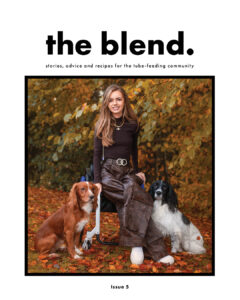
The breadth of the content is what makes it particularly useful. Alongside information about feeding itself are stories about travel, body image, fashion, family life, advocacy and navigating healthcare. There are perspectives from parents, adults living with tubes and health professionals, creating a resource that feels quite different from the patient information sheets someone might receive when tube feeding is first discussed.
For clinicians, resources such as The Blend are a useful reminder to extend our conversations beyond physiology. When we discuss a feeding tube with someone, the goal is not simply to establish a safe and adequate route for nutrition and hydration. We are helping someone make a decision that may affect how they organise their day, participate socially, travel, work, eat, dress and think about their body.
For people considering or already living with tube feeding, The Blend offers access to something clinical resources cannot fully provide: the experiences of people who have already navigated many of those questions themselves.
Ultimately, a feeding tube is a tool. It may be a temporary bridge through illness, part of a rehabilitation journey, supplemental support alongside oral intake, or a long-term way of receiving nutrition. Its success should not be measured by how closely someone’s eating resembles everyone else’s, but by whether it supports their health, goals, participation and quality of life.
Nutrition, swallowing and safety matter. So does the life being lived around them.